
Granny flats: when love and the law collide
Thinking about a 'granny flat' arrangement for your parents? Here's what you need to know

Welcome to Care-full, a practical guide to caring for aging parents. Here, you’ll find my tips about how to juggle your caring responsibilities, where to find support, how to navigate government bureaucracy, and how to keep parents safe at home or find the right care facility for them. And – perhaps, most importantly – you’ll realise that you’re not alone during what’s probably your biggest role (reversal) yet!
Disclaimer: This post does not contain professional, financial or legal advice. Speak to a lawyer specialising in aged care for more information about your or your parents’ situation.
I was about 21 years old when I got my first job in journalism. I was living with my parents and, having applied unsuccessfully for dozens of reporting jobs, I wasn’t at all confident I’d be offered the position of editor’s assistant (gofer!) at a medical news magazine not far from home. And then the phone call came asking when I could start.
The only other person at home was my grandmother. The two of us were so excited by the job offer we decided we simply had to celebrate. Party animals that we were, my 80-year-old grandmother and I drove to a local cafe to splurge on coffee and cake.
Grandma was a sweet, happy woman and I’ve got great memories of the times I spent with her and my grandfather in their home in Brisbane. Some years after his death, Grandma moved to Sydney to live with us. Dad was her only child and she loved my mother, so the move made a lot of sense. Our house was renovated so that she could have her own kitchen and dining area, a living room, bedroom and her own bathroom. I wasn’t privy to the conversations the three of them had about how this would be paid for but I’m pretty sure the funds would have come from the sale of Grandma’s Brisbane home.
She continued to live independently of my parents - for many years she cooked her own meals and did her own laundry, and about once a week caught a cab to the local RSL for a hot meal, a gin and tonic and a spin on the poker machines.
I loved spending time with her. She always woke early and waited in bed for us to bring her a cup of tea. When I began earning enough money to spend it on fashion, I would ‘model’ my new clothes and shoes in front of her in our living room. To each crazy outfit she would always say “Lovely!”
We always referred to her part of the house as ‘the flat’ or Grandma’s flat’. I don’t think we ever called it a ‘granny flat’ but that’s what it was. I don’t like the term - it’s a bit patronising and sexist, but in Australia, we are stuck with it. Read on and you’ll find out why.
Last year, when I was despairing at finding suitable residential aged care for my mother, I wondered if my partner and I could renovate our house to accommodate her. It was too late really - by then Mum needed more care than I could give her. For a whole lot of other reasons, I’m glad I didn’t think of it years earlier when Mum could have still lived independently while she lived with us.
Pitfalls and potholes
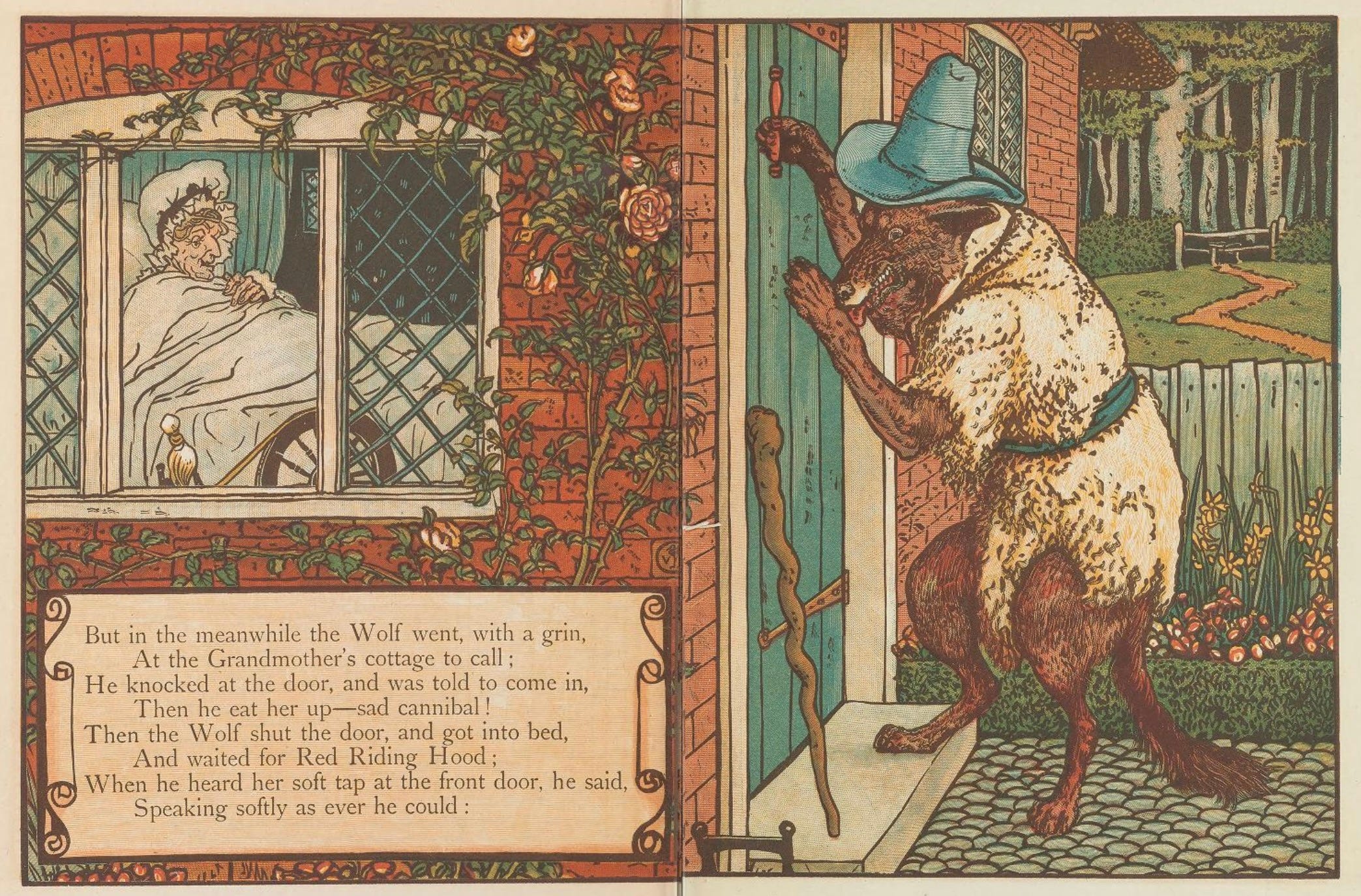
I say that because the garden path that leads to the granny flat is a perilous one, strewn with pitfalls and potholes. But unlike the children’s story Red Riding Hood, it’s not granny who’s the wolf.
The implications of blending families in these kinds of living arrangements are many. Setting aside the fact that you are setting yourself up as a carer which could affect how you spend your own retirement, granny flats or family care agreements (I’ll explain the difference in a minute) can affect aged pensions, have legal, tax and estate planning implications, and can damage your relationships with your parents and your siblings.
Before you throw your hands up in despair, I am not saying you shouldn’t enter into these agreements. If you or your parents can’t bear the thought of them moving to residential aged care, or if you love the idea of living as an extended family, it can be a really beautiful thing to do. However, the sting is in how you do it.
A couple of weeks ago, I interviewed Brian Herd, a recently retired Australian lawyer who specialised in elder law, who now works as a mediator helping families navigate issues that emerge as parents age. (A disclaimer, today’s headline was inspired by something he wrote in his book, Avoiding the Ageing Parent Trap).
Brian told me Australians rarely document these kinds of family arrangements and even more rarely consult a lawyer beforehand.
“There might be a family discussion, followed by a conclusion, a handshake, an understanding, which is then called the oral family arrangement,” he says. “Speaking as a lawyer, I can tell you most family arrangements fall down when there is just an oral arrangement because it becomes ‘he said’ ‘she said’, with no other terms and conditions documented.”
Why does it matter? Because the arrangement only works while it suits all parties, and one of those parties is an elderly and often vulnerable person or persons. When it goes wrong, it can threaten their wealth, independence and dignity. They could be left, literally, with nothing.
Why documenting your family agreement is a good idea
—It may prevent a breakdown of your relationship with your parents
—It provides an open and transparent record of an agreement for siblings
—It can be used in mediation or in a court case
—It may prompt your parents to review their will and enduring power of attorney and guardianship arrangements
—It will highlight any effect the agreement might have on your parents’ aged pensions or capital gains tax
—It may help avoid any later accusations against you of ‘elder abuse’
—Writing down the terms of the agreement and its implications might make you think twice about entering into it in the first place!
[Adapted from Avoiding the Ageing Parent Trap by Brian Herd]
“Documenting the agreement forces people to address the implications,” Brian says. “Not documenting it means they don’t need to consider what the actual implications are and they are huge – social, legal, Centrelink, tax and the general nature of the family relationship that can be impacted by these types of arrangements.”
Undocumented arrangements are “fluid, they are unspecified and can lead to disagreements, particularly where the parents’ circumstances change over time – as they do. They become more dependent, more reliant, more in need and you have some families who are – and this is not a criticism – very reluctant to spend their parents’ money or in some circumstances even their own money to provide for the care of their parents” he says.
What exactly is a ‘granny flat’?
We often think of a granny flat as a small dwelling built in the backyard of a freestanding house. Traditionally, they were built for “granny” but over time they morphed into modest accommodation built for a family’s teenagers or for renters not connected to the family.
A growing number of Australians are building these types of dwellings and, although it’s hard to say how many are actually for an aging parent, research and anecdotal evidence show plenty of adult children are building them for their parents rather than moving them to aged care homes. There are two reasons why residential aged care isn’t popular: first, the 2021 Aged Care Royal Commission shone a spotlight on serious and alarming shortfalls in the quality of institutional care, and, as I’ve written before, it’s often a very expensive option. Which leads to the other reason people aren’t choosing them: many children want to preserve as much of their parents’ money as possible so they can inherit it.
What does Centrelink say?
Centrelink legally defines ‘granny flat’ or a ‘granny flat interest’ as “an agreement for accommodation for life”, which it says can affect an elderly person’s pension and which might be included in their assets test.
The older person pays for the right to live in a specific home for life. The property must belong to someone else. It’s not a description of the type of property; it can be all or part of a private residence, it must be the older person’s principal home, and it isn’t part of that person’s estate when they die.
Centrelink says you create a granny flat interest when you exchange assets, money or both for a right to live in someone’s property for life.
“For example, you could transfer ownership of your home but keep a lifelong right to live there or in another private property. Or you could transfer assets, including money, in return for a lifelong right to live in a property.”
If you want to do this and still keep your or your parents’ pension, you need to prove to Centrelink you have a granny flat interest. You can see why having some kind of document about any agreement you come to with your parents is essential.
Other kinds of arrangements
Family care arrangements is the broad term that covers a wide range of blended living arrangements that also involve care. It includes granny flats (regardless of whether the older person is or isn’t eligible for the aged pension), and formal and informal agreements where assets are swapped for promises of care - for example, where an aging parent pays for the granny flat on land owned by their child in return for being allowed to live there until they die.
Even if your parent doesn’t receive the aged pension, you should formalise any kind of asset-for-care swap. Brian told me a number of hair-raising stories about what can go wrong when there is no documentation.
One was a case of an elderly woman who transferred ownership of her $1.4 million home to one of her daughters. In return, the daughter moved into that home promising to care for her parent for the rest of the elderly woman’s life. Centrelink applied the ‘granny flat interest’ test to the arrangement and declared the mother wouldn’t lose her pension. So far so good.
The problem arose when the mother died and her other adult children found out about this arrangement. They had expected to benefit from the sale of the house, not knowing that before she died mum had transferred ownership of the house to their sister.
Guns drawn at 10 paces!
The ‘what ifs’
Brian reckons people are “mad to enter into these arrangements without legal and financial advice”. Sure, he’s a lawyer so he would say that wouldn’t he? But for the same reasons I have recommended using the services of people who specialise in aged care financial advice, I recommend you talk to a lawyer who specialises in elder law before committing to an arrangement like this. At the very least they can advise you of what Brian calls the ‘what ifs’.
What if the children want to sell the home? What happens to the granny flat arrangement?
What if your adult child dies before you? Who will inherit the house/granny flat?
What if the child you live with gets divorced?
“These [granny flat] arrangements are now impinging on binding financial agreements between spouses, what we used to call pre-nuptials,” says Brian. “Where does a granny flat arrangement fit into that, especially if the couple divorce and the parent’s arrangement is not recognised?”
These are the things people don’t consider when, over a cup of tea, they say ‘Mum, why don’t you move in with us?’
“People don’t think about the exit strategy, which is a common issue for many financial arrangements: how do we get out of this and is it proper that we get out of it?” he says.
“How can the parent be compensated when the child cancels this arrangement? Children might not see why Mum should be compensated but there are good reasons why she should be. But you don’t want to get to this stage.”
“It is fraught with little tricks and traps; get advice before you make seminal decisions.”
More reading
Avoiding the Ageing Parent Trap, by Brian Herd, published by Big Sky Publishing
When granny flat deals go bad: legal pitfalls for the elderly - The Lighthouse, Macquarie University, 2020
Betrayed: what every retiree must know before moving in with family - The Senior, 2025
When granny flats go wrong – perils for parents highlight need for law reform - The Conversation, 2019
And now, something different
A couple of recommendations for you on different aspects of caring and ageing. First is Checking One’s Levels, a beautiful short audio story about memory loss and porridge. It features recordings made over several months by a part-time caregiver and aspiring audio producer who is looking after a woman with Alzheimer’s and Dementia. You can listen to it here.
I also heartily recommend Cindy Martindale’s February Substack post about the tensions that can arise between siblings caring for ageing parents.
And finally, an interesting account by Tim Fearnside of how he realised - and came to accept - that he needed hearing aides.
Thanks for reading Care-full. If you have enjoyed this post, please give it a [heart], which will make it more visible to new readers, and suggest to friends that they subscribe to support my work. Receive new posts every Saturday.
Wendy Frew is an Australian journalist, author and community broadcaster whose work has appeared in the Sydney Morning Herald, the Australian Financial Review and the BBC, and on 2SER and Radio Northern Beaches. She was the primary carer for her beautiful nonagenarian mother. She wishes she could fly like a Peregrine falcon.
Granny flats are popping up like mushrooms in my neck of the Northern Beaches woods. I just hope that some of the builders and their elderly parents consider getting legal advice before blithely acting on the innocuous words “Mum, why don’t you move in with us?”