
Is it time your parents took a back seat?
It's hard for our parents to stop driving but a bit of planning and some support can help


Welcome to Care-full, a practical guide to caring for aging parents. Here, you’ll find my tips about how to juggle your caring responsibilities, where to find support, how to navigate government bureaucracy, and how to keep parents safe at home or find the right care facility for them. And – perhaps, most importantly – you’ll realise that you’re not alone during what’s probably your biggest role (reversal) yet!
Before I get into the nitty gritty of this topic, I wanted to say ‘hello’ to new readers of Care-full. Thank you for subscribing and I look forward to hearing from you. I now have readers from as far afield as South Africa, the US, the UK, Canada and New Zealand, along with my Aussies. A lot of my content is tailored to an Australian audience but hopefully the sentiments and tips will be useful to people who don’t live here.
When we were small children living in a suburb with no public transport, Mum and Dad could only afford one car. Dad used it to get to work which meant Mum had to get about on foot, with two small children. It must have been hell. The local shops were a bit over 1km away - but it was an uphill walk. It was a 45-minute downhill walk on unpaved footpaths to a larger shopping strip and buses to the city.
I can imagine what it meant for my mother’s independence when she and Dad finally bought another car. It made it easier for her to rejoin the paid workforce, and to take part in her life-long passion of being involved in amateur theatre productions.
Years later, after Dad died, she moved to a suburb much better served by public transport, which she took advantage of. But she still drove well into her eighties.
It’s easy to take for granted the role cars play in modern Australian life. And although public transport in our bigger cities is far better now than ever before it’s often not an alternative for older people.
In the spirit of my recent posts about difficult conversations, today I’m tackling how to discuss with your parents whether they should stop driving.
And a quick note - don’t skip the videos I have included; both are really helpful.
It’s a conversation I didn’t have to have with Mum. She was always a confident, competent driver but when she reached 85 - as stipulated under NSW driving laws - she opted for a licence that restricted where and how far she could drive, which meant she didn’t have to sit for a practical, on-road driving test. A couple of years later, after being involved in a small bingle (not her fault) she realised she’d lost her road confidence and decided to stop driving.
But giving up driving is daunting for many older people. Understandably, they fear losing their independence; perhaps they worry they will become a burden on family or friends; they might even feel they are losing part of their identity as a capable person who can look after themselves and others. It takes a lot to come to grips with that sense of declining ability.
To drive or not to drive?
Here are some tips about how to start the conversation about alternative transport:
Start discussions as early as possible, and when everyone is calm
Where possible, have discussions when there have been changes in medications or health status, rather than during or after a driving incident
Have short and frequent conversations, rather than one long discussion
Concentrate on the person’s strengths and the positive aspects of other options
Acknowledge that giving up driving is hard to do
Normalise the situation — everyone will have to stop driving at some point
Be respectful and try to understand how the older person feels
Consider what driving means to the person. It might be a sign of status, a hobby or even a job. Think about ways that this relationship to the car and driving might be addressed in other ways
[Modified from a list of tips provided by Dementia Australia]
Looking for help on how to address this issue, I spoke to motoring organisation NRMA’s road safety expert, Dimitra Vlahomitros.
It’s easy to assume drivers over the age of – let’s say 80 – are a risk to themselves and others. There are plenty of media reports about elderly people mistaking the accelerator for the brake pedal and ploughing into pedestrians, and lots of outrage on social media (what’s new?) about why nothing’s been done about it.
But one of the first things Dimitra told me was that older drivers are no more dangerous than other drivers.
“Older drivers are one of our safest cohorts of drivers,” Dimitra says, because “they self-regulate their driving.”
My mother is a great example. As she aged, she stuck to known routes, drove shorter distances, wouldn’t drive at night, and didn’t drive to unfamiliar places. She also set her speed limit so that the car beeped at her if she went over 60km an hour because of the many speed traps on the main road near her home.
Dimitra says years of research shows older drivers “know their limitations”. That doesn’t mean they don’t have accidents and it doesn’t mean we shouldn’t regulate their driving. Just as we are cautious about young and new drivers (maximum speed limits and alcohol restrictions for provisional drivers), depending on where you live there are also restrictions on older drivers.
It’s important to note too that if an older driver is involved in an accident, regardless of who is at fault, they are more likely to be injured because they are already frail. The same goes for older passengers and pedestrians. Your parents might be great drivers but they are still at risk from other drivers.
As we age, our driving skills do decline. One of the most common reasons older Australians stop driving is age-related macular degeneration. But unfortunately, many people don’t even realise they have a problem with their eyesight.
Hearing loss and problems concentrating also make driving difficult for older people, according to the association of the Australian and New Zealand transport agencies. Physical frailty can cause problems too – a decline in muscle strength and endurance, arthritis, and reduced flexibility can make it difficult for older people to get in and out of cars, adjust mirrors and seats, or turn to reverse.
Some of these problems can be overcome with adaptive equipment.
Dimitra says if you want to keep your parents safely on the road for a bit longer plan for the day when they will have to stop driving. She recommends starting the conversation sooner rather than later.
“We want families to have conversations about a transition from driving to not driving really early,” she says. That means helping older people rely more on public transport, experimenting with community bus services, and traveling to social or other events with a family member or friend, whenever possible - before they give up their car, and while they are fit and healthy.
“Driving is probably the last thing you give up [as you age] because it can be hard to walk to the bus stop or the train,” she says, and because so many of us love our cars. You don’t want the transition to happen overnight.
Public transport isn’t perfect so check timetables, work out the distance from your parents’ home to the nearest train station or bus stop, and compare the cost of using public transport versus driving. In NSW, age pensioners can travel to just about anywhere in the state on any public transport service for $2.50. That has got to be the bargain of the century.
If your parents are thinking of a sea change or tree change, or even just downsizing to another suburb – Dimitra recommends exploring the transport options. Our cities might not have perfect public transport services, but they are a hell of a lot better than those afforded to people in rural and regional areas.
Depending on how your parents are coping, suggest they take a refresher driving course carried out by a licensed driving instructor who holds a senior assessor qualification. Assessments are usually conducted from the driver’s home on the streets they drive every day. Drivers can take as many assessments as they want as long as they don’t have a ‘serious fail’ where their driving behaviours represent a danger to themselves and others.
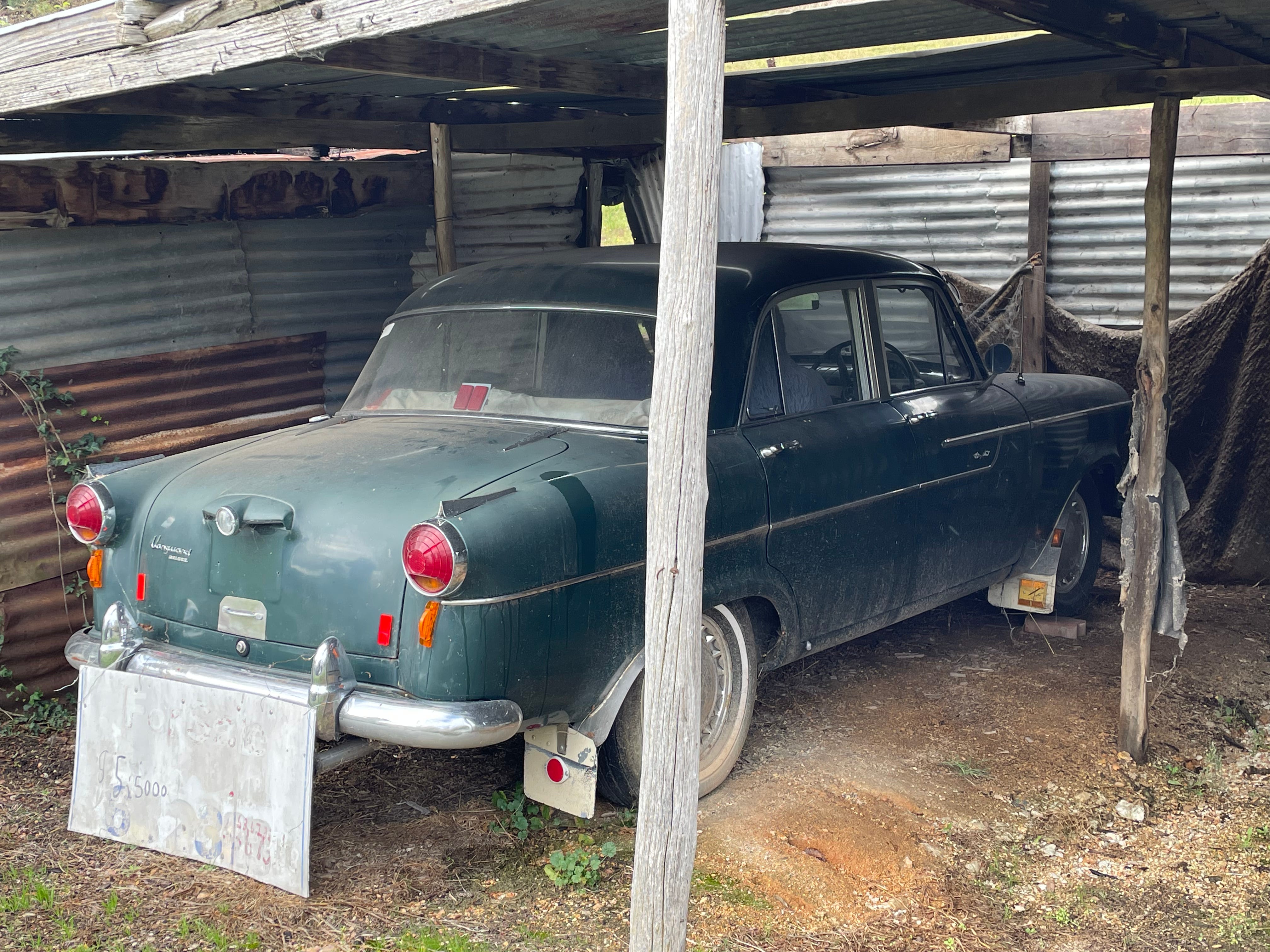
Another thing to think about is the age of your parent’s car. Generally, older people are driving older cars that aren’t fitted with all that whiz bang stuff (my technical term for things such as airbags and autonomous emergency breaking) that keeps us safe before, during and after a crash. If your parents are buying a new or used car, check it has at least some safety features.
Seatbelts pose another dilemma. Dimitra told me that in Australia, we have a very high compliance rate with mandatory seatbelt use but some drivers, including older people, find them uncomfortable and don’t use them correctly, for example, tucking the belt under their arm or having it too low across their stomach.
“We need to educate people about how to adjust a seat belt so that it fits more comfortably on the neck and where to get help if you can’t do this yourself,” she says.
What do you do if it’s no longer safe for your parents to drive?
This is going to be a really tough conversation. Start slowly with general statements about how stressful it is to drive in peak hour traffic; share your own stories of forgetting how to drive somewhere or scratching the car in the local shopping centre car park (Come on, you know you’ve done it!) If even these kinds of conversations get you nowhere, is there someone else who can start the conversation – a sibling, a trusted family friend? If your parent has dementia, you can get support from Dementia Australia. I’ve included one of that organisation’s videos here. It’s really helpful regardless of your parents’ cognitive status.
Another option is the family doctor. Australian GPs frequently discuss driving skills with elderly patients, often as part of mandatory, state-mandated, or age-based medical assessments. The regulations vary by state, but doctors must assess fitness to drive in older, often 75+ patients.
If all else fails and you are sure your parent’s driving is putting themselves and others in danger you can report them to your state’s roads authority. In NSW, this link for Transport for NSW will show you how.
Other issues
There are lots of other things to consider when it comes to older drivers that I’ll only touch on briefly. They generally make errors because they are less able to deal with complexity and rapid decision-making – not because they are engaged in drink driving or the reckless driving so characteristic of young rivers. Mark King, a lecturer in psychology and counseling at the Queensland University of Technology, says if the driving environment can be made less complex and demanding, older drivers can continue to drive safely for longer. For example, we should find ways of helping older drivers enter and exit freeways more easily.
Are we at risk of stereotyping older people by assuming they should stop driving?
Look at the facts and look at why accidents happen, says Dimitra. “It is important to remember that our older drivers are among our safest drivers.”
And don’t forget, even when our parents give up their cars they will still enjoy backseat driving!
More reading
When is it time to stop driving - The Conversation
Getting older drivers off the road won’t solve safety problems - The Conversation
Driving for seniors - NRMA
Am I still fit to drive? - Vic Roads
Age and driving - Queensland Government
Thanks for reading Care-full. If you have enjoyed this post, please give it a [heart], which will make it more visible to new readers. Subscribe to receive new posts every Saturday and to support my work.
Wendy Frew is an Australian journalist, author and community broadcaster whose work has appeared in the Sydney Morning Herald, the Australian Financial Review and the BBC, and on 2SER and Radio Northern Beaches. She is the primary carer for her beautiful nonagenarian mother. She wishes she could fly like a Peregrine falcon.
My 80 year old brother's driving terrifies me, but then it always has. I have to tell myself that he's actually never had an accident.
Thanks for putting this together, Wendy. It's a really good gateway for discussing driving. The videos frame the facts well, the realities, rather than focusing on subjective emotions/judgment.
FYI, in the UK, "Driving licences expire at 70 years of age, so when you reach 70, you need to renew your driving licence if you wish to continue driving. You then need to renew it every three years afterwards." Older drivers need to notify the DVLA about certain health conditions that will be noted on their license. https://www.gov.uk/renew-driving-licence-at-70
Anyone over 70, without a renewed license is fined, plus the insurance would have expired.
I'll share this in the Carer Mentor Anthology for others to see. Thanks, Wendy.